

A hardwood upgrade transforms a room and can increase resale value. This ultimate guide to hardwood floor installation walks through installation steps, typical costs, main flooring types, preparation tips, and the benefits of hiring our professional installation team, so you can choose the right approach for your home and budget.
What Are the Essential Steps in Hardwood Floor Installation?
A successful installation starts with planning: prepare the subfloor, select the appropriate installation method, install the boards, and finish the surface so the floor performs well and lasts.
How Do You Prepare the Subfloor for Installation?

Clear the room, fix moisture issues, and confirm the subfloor is flat and level to reduce warping, loose fasteners and callbacks.
Moisture affects fastener holding and long-term performance. It’s important to test and remediate any problems before you begin.
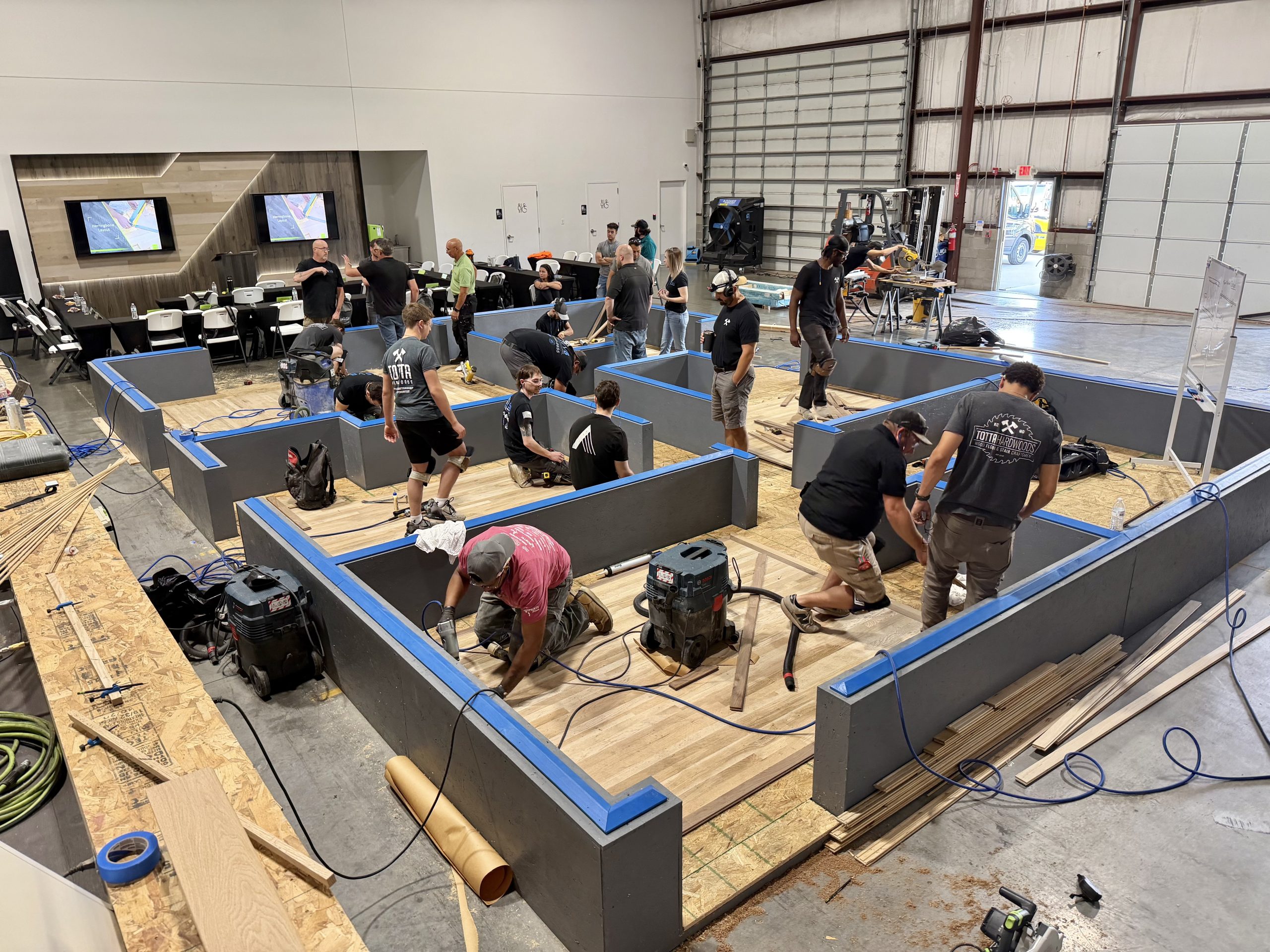
Laboratory tests evaluated how humidity changes affect fastener holding in OSB and plywood subfloor panels. Hardwood strips were installed over both panel types and tested with common fastener types to measure retention under varying humidity conditions.
What Are the Different Installation Methods: Nail-Down, Glue-Down, and Floating?
Match the installation method to your plank type and site conditions.
- Nail-Down: Boards that are less than 5” are fastened to the subfloor with nails or staples. Common for solid hardwood and thicker engineered planks. Anything over 5” cannot be nail-down without glue assist. NWFA nail-down guidelines require proper subfloor preparation, moisture testing (within 4% of flooring), a 1/2″ expansion gap, and specific fastener schedules (usually 1-1/2″ to 2″ cleats or staples) placed 4-6″ apart, 1-3″ from end joints. Use 18-gauge cleats for hardwoods to prevent splitting, and ensure proper subfloor flatness (1/4″ in 10′ or 3/16″ in 6′).
- Glue-Down: NWFA (National Wood Flooring Association) glue-down guidelines require subfloors to be flat within 3/16” in 10 feet or 1/8” in 6 feet. Use high-quality, flexible, elastomeric adhesives, ensuring proper moisture testing, acclimation, and using a notched trowel for full coverage, particularly for engineered flooring.
- Floating: Planks sit on an underlayment and aren’t fastened to the subfloor. Typical for engineered and laminate products; this method allows controlled movement. NWFA guidelines for floating floors require subfloors to be flat within 1/8” over a 6-foot radius or 3/16” over a 10-foot radius, properly acclimated, and dry. Engineered flooring must be used, leaving a minimum 1/2” expansion space around all vertical obstructions. Underlayment should be designed for floating installations, avoiding excessive thickness that causes joint failure.
Each method has specific requirements – choose the one that fits the product, subfloor and room conditions for the best long-term result.
What Types of Hardwood Flooring Are Best for Installation?
Consider dimensional stability, appearance and the room’s conditions. Engineered hardwood tolerates moisture better than solid wood and is often the most versatile choice.
How Do Solid, Engineered, Prefinished, and Unfinished Hardwoods Compare?
Solid hardwood offers a classic, authentic look but can be more moisture-sensitive. Engineered boards add stability and allow glue-down or floating installations. Prefinished planks speed installation and reduce dust; unfinished boards allow on-site sanding and custom staining.
Which Wood Species Offer the Best Durability and Aesthetics?
White oak (including European white oak) balances durability and a timeless grain; engineered versions provide the same look with improved dimensional stability and lower maintenance.
Hardwood structure helps explain species performance across environments.
Hardwoods (broad‑leaved trees) are typically dense and durable and often display distinctive grain features like medullary rays. Flooring species include oak, teak, mahogany, walnut, elm and sapele – each with its own look and performance profile.
How Should Homeowners Prepare for Hardwood Floor Installation?
Good preparation reduces surprises and keeps your project on schedule: coordinate access, remove furniture, and follow your installer’s site recommendations.
What Is the Acclimation Process and Why Is It Important?
Acclimation lets flooring reach equilibrium with the room’s temperature and humidity, minimizing gaps, cupping and buckling – follow the manufacturer’s recommended acclimation period.
How Does Dustless Technology Improve Installation Experience?
Dustless sanding captures fine particles during finishing, cutting airborne dust, speeding cleanup and improving indoor air quality – especially useful in occupied homes.
What Are the Benefits and Costs of Professional Hardwood Floor Installation?

Professional installers deliver consistent, high-quality results and save you time. Below are the main advantages and key cost factors to consider when planning your project.
Benefits of Professional Hardwood Floor Installation:
- Expert, personalized guidance: Installers help you select the right materials and installation method for your layout and needs.
- Quality finish: Pros use correct tools and techniques such as dustless sanding and factory-applied finishes to achieve durable results.
- Longer lifespan: Proper installation reduces future issues and extends floor life.
- Increased property appeal: A well-installed hardwood floor enhances curb appeal and resale potential.
Costs of Professional Hardwood Floor Installation:
- Labor costs: Varies with room layout, trim, and complexity.
- Material costs: Species, plank width and finish affect price.
- Potential additional fees: Subfloor repairs, moisture mitigation or unexpected site conditions can add to the total.
Installers need square footage and flooring type to provide an accurate estimate.
Why Choose Professional Installation Over DIY?
Professionals bring experience, the right tools and quality control, reducing mistakes and delivering longer-lasting results. For complex layouts or high-end finishes, hiring a pro is typically the better long-term choice.
Frequently Asked Questions
What should I consider when selecting the right installation method for my hardwood floors?
NWFA (National Wood Flooring Association) guidelines for hardwood flooring installation require a dry, secure, and enclosed job site with permanent HVAC systems operating to maintain 60-80°F and 30-50% relative humidity. Key steps include testing for moisture (subfloor < 12% MC), proper acclimation, using moisture retarders, and ensuring a minimum 18-inch crawlspace clearance.
How can I prepare my home for hardwood floor installation?
Clear furniture, ensure the subfloor is clean and dry, address moisture issues, and coordinate access and any pre-install instructions with your installer.
What are the common mistakes to avoid during hardwood floor installation?
Don’t skip moisture testing, acclimation or subfloor leveling; allow expansion gaps and follow manufacturer guidelines to avoid gaps, cupping or premature failure.
How does humidity affect hardwood flooring, and what can I do to manage it?
Humidity makes hardwood expand and contract. Keep indoor humidity near 35%–55%, acclimate flooring before installation, use dehumidifiers or HVAC to control conditions, and try to maintain a temperature range of 60-80 degrees Fahrenheit.
What are the advantages of using prefinished hardwood flooring?
Prefinished flooring saves time and provides a consistent, durable coating ready for immediate use after installation.
Can I install hardwood flooring in high-moisture areas like kitchens or bathrooms?
Solid hardwood can definitely be installed in kitchens and bathrooms. It’s important to clean up any spills immediately.
What is the best way to handle scratches and dents on hardwood floors?
You should have a professional do this but if you are going to do this on your own use stain pens or repair kits for light scratches; deeper dents may need sanding and refinishing. Prevent damage with rugs and felt pads, and consult a pro for major repairs.
What is the acclimation process for hardwood flooring?
Acclimation means letting flooring sit in the installation room to adjust to local temperature and humidity; follow the manufacturer’s timeframe to reduce gaps and cupping.
How can I ensure my hardwood floors are installed correctly?
Hire experienced installers, verify the subfloor is moisture-tested, flat and level, and follow manufacturer guidelines; keep clear communication about expectations.
What maintenance is required for hardwood floors?
Sweep or vacuum to remove grit, use a damp mop like the Bona Hardwood Floor Spray Mop with a pH-neutral cleaner as needed, avoid excess water so you don’t oversaturate, use rugs in high-traffic areas and felt pads under furniture; refinish when the finish wears thin.
Can I install hardwood flooring in a basement?
Basements require moisture control – use dehumidifiers and vapor barriers. Engineered hardwood is typically the preferred choice; have a professional assess the space first.
What are the benefits of using engineered hardwood over solid hardwood?
Engineered hardwood is more dimensionally stable due to its layered construction, tolerates humidity shifts better, and often comes prefinished to save time and reduce dust.
How do I choose the right wood species for my hardwood floors?
Choose by durability, appearance and your home’s conditions – harder species like oak handle traffic well; consider grain and color for the look you want.
What should I do if my hardwood floors start to warp?
Identify and stop the moisture source (leaks, high humidity or improper acclimation), reduce humidity and consult a professional for repairs if damage is severe.
What factors should I consider when choosing hardwood flooring?
Compare species, durability, appearance and the room’s environment; choose engineered for humidity tolerance or prefinished for a faster, cleaner install.
How can I prevent moisture damage to my hardwood floors?
Acclimate before installation, maintain indoor humidity near 35%–55%, use dehumidifiers in damp areas, repair leaks quickly and install recommended moisture barriers.
How do I choose the right finish for my hardwood floors?
Pick a finish for appearance, durability and maintenance: water-based finishes dry faster with less odor – test first.
What are the signs that my hardwood floors need repair?
Look for deep scratches, dents, warping, wide gaps, worn finish or persistent squeaks – these indicate repairs or refinishing may be needed.
Is it possible to change the color of my hardwood floors?
Yes, refinishing (sanding and staining) changes color; less invasive options include tinted finishes or color-enhancing products – consult a professional.
What is the best way to maintain hardwood floors after installation?
Sweep or vacuum regularly, clean with a damp mop like the Bona Hardwood Floor Spray Mop and pH-neutral cleaner, avoid excess water so you do not oversaturate, and protect high-traffic areas with rugs and felt pads.
How long does hardwood flooring typically last?
With proper installation and maintenance, solid hardwood can last for decades and be refinished multiple times; engineered lifespan depends on veneer thickness and care.
What are the environmental impacts of hardwood flooring?
Hardwood can be renewable when responsibly sourced – look for certifications like FSC or Green Guard certifications or consider reclaimed wood to reduce environmental impact.
How can I tell if my hardwood floors need refinishing?
Refinish when the protective layer is worn – signs include persistent dullness, visible scratches, discoloration or water no longer beading; then contact a professional.
Professional Hardwood Floor Installation: Key Costs & Benefits
Understanding installation steps, product differences and proper preparation helps make your hardwood project smoother and more predictable; professional installation provides quality control and durable results.
If you’re considering new hardwood floors, contact SVB Wood Floors today to schedule your free in-home consultation and discover the best wood floor installation solutions for your home.